

Apple iPhone 3G/3GS/4 bug grants access to address book …
Ah dear.
More:
Apple iPhone 3G/3GS/4 bug grants access to address book …
Mobile industry unites for universal, energy-efficient chargers
March 20, 2010 by admin
Filed under Uncategorized
[#2: Edit Options>MightyAdsense>Adsense Code]
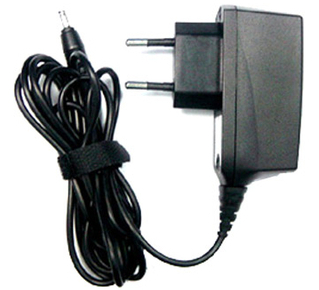
You know how it goes when you switch from one handset maker to the other one? Your old cables are useless with the new phone. Handset makers know that but they don’t seem to care much. No more!
At Mobile World Congress in Barcelona, the GSMA along with 17 leading mobile operators and manufacturers committed to implement a cross-industry standard for a universal charger for new mobile phones. The idea is to adopt a common format for mobile phone charger connections as well as energy-efficient chargers, to reduce up to 50% in standby energy consumption and make life easier for the mobile phone users, as the some time. In other words, the move could eliminate up to 51,000 tonnes of duplicate chargers!
As for the timeline, the group has set an ambitious target that by 2012 a universal charging solution (UCS) will be widely available in the market worldwide and will use Micro-USB as the common universal charging interface. Moreover, it has been agreed that by the January 1st, 2012, the majority of all new mobile phone models available will support a universal charging connector and the majority of chargers shipped will meet the high efficiency targets set out by the Open Mobile Terminal Platform (OMTP).
The initial group of companies who have joined the GSMA’s UCS initiative include 3 Group, AT&T (NYSE: T), KTF, LG, mobilkom austria, Motorola (NYSE: MOT), Nokia (NYSE: NOK), Orange, Qualcomm (NSDQ: QCOM), Samsung, Sony Ericsson (NYSE: SNE), Telecom Italia, Telefónica, Telenor, Telstra, T-Mobile and Vodafone.

Incoming search terms for the article:
Pantech Sky Wind with Emotion Engine is blow-controlled
February 21, 2010 by admin
Filed under Uncategorized
[#3: Edit Options>MightyAdsense>Adsense Code]
Pantech may not be among the world’s major players in the mobile industry, but it’s surely a company that wants to bring innovative products.
The South Korean manufacturer has recently announced a new phone, Pantech Sky Wind IM-S410K, which can be controlled if you simply blow at it. This can be done thanks to the so-called Emotion Engine (developed by Fantalog Interactive) – a software that allows the handset’s microphone to recognize various kinds of blows.
So you can basically use blows in order to switch wallpapers, adjust brightness, and even take photos, all without touching any of the phone’s buttons.

The Sky Wind also has some sort of accelerometer, as well as a camera that can detect movement. Other than that, the phone’s specs are unknown.

The price of Pantech IM-S410K was not unveiled. The handset should be available in the second half of February, and it will most probably be a Korea-exclusive product.

Beginning of the Cablefree world
February 1, 2010 by admin
Filed under Uncategorized

With UWB becoming popular and more devices about to be rolled out, the cable connections between TV, VCR, DVD players, Camcorders, etc can be a thing of past.
In UK, OFCOM removed the restrictions for the use of UWB devices upto a range of 30 metres. In the US and Japan, UWB home hubs are a popular way of sharing domestic broadband.
Ultra-Wideband (UWB) can be used to send huge amounts of information between electronic devices, making it suitable for connecting items such as digital TV decoders and DVD players to television sets, or digital cameras to computers.
It could also be used to wirelessly link satellite dishes or cable TV connections to set-top boxes, doing away with the need for cables to be poked through walls and run around skirting boards. Satellite broadcaster Sky, for instance, is understood to be looking at whether UWB could be integrated into its equipment.
Described by techies as “Bluetooth on steroids“, UWB can operate over distances of up to 30 metres. Japanese electronics manufacturers are already producing modems that use UWB, while Cambridge-based chip maker ARM Holdings has deals with several companies that plan to make UWB devices.
Separately, Vodafone yesterday joined the Wimax Forum which is creating standards and specifications for a new longer-range wireless broadband technology. The company stressed that it is taking a neutral stance on the next generation of wireless technologies, but the move raised eyebrows in the mobile phone industry.
Wimax, which can operate over many miles, is seen as a competitor to another next generation wireless technology, which is being developed by the mobile phone companies and builds on the existing 3G standard. LTE, or Long Term Evolution, is an mobile industry-led project designed to upgrade the existing 3G service. The LTE group is supposed to come up with recommendations on a new standard next month.
Earlier this year Vodafone’s chief executive Arun Sarin warned that the process of getting a new wireless standard was taking too long. “As an industry it takes us a long time to get things done – we need to move faster or others will eat our lunch,” he said.
Meanwhile The European Commission is opening up the wireless technology market by discarding out-dated rules limiting the areas of available radio spectrum. Next-generation wireless technologies such as BlackBerrys and smartphones work best over low frequencies that, until now, were reserved for GSM mobile phones. According to a statement last week, the Commission will allow new services to co-exist alongside GSM. The aim is to establish a more flexible, market-driven approach to spectrum management, says European Union telecoms commissioner Viviane Reding.

Incoming search terms for the article:
LTE may be not that far, T-Mobile tested LTE
January 31, 2010 by admin
Filed under Uncategorized

As mentioned by Raju Shanbhag in his blog the above data transmission test by T-Mobile went smoothly without interruptions and without loss of quality even across different cells on the four kilometre test track area.
This test of LTE data transmission across the cell is quite significant when considering the fact that the mobility is the basis of the mobile communication.
Although in some articles one do get the feeling that LTE might still be far away but the above development certainly tells the different story.
The world’s largest mobile operator in terms of subscribers, China Mobile, is defnitely seems to be keeping an eye on these developments and hence it is eager to begin testing 4G TD-LTE soon, a time division duplex (TDD) version of LTE that will be backward compatible with the struggling Chinese 3G standard TD-SCDMA.

Incoming search terms for the article:
- huawei lte at&t (1)
- lte (1)
- nortel lte (1)
- will t-mobile move to lte (1)
 Powered by WordPress ·